
Finding Cibolo Resident Records
Cibolo is served chiefly through Guadalupe County systems, not one citywide name list. A current owner question usually starts with a street address or owner name in the appraisal roll. A deed question moves from the parcel's legal description to the County Clerk index. A historical household question may begin with Seguin-area directories, newspapers, census reels, or tax rolls. Each route has a different purpose, so a Cibolo resident search should keep the source, search date, and exact spelling together.
Ownership is not the same as occupancy. A tax mailing address can belong to an owner, agent, trust, or another property. A voter match supports registration, not every person in a home. These limits matter most when several Cibolo records share a common surname.
- Search the address or owner in the Guadalupe appraisal roll and save the parcel identifiers.
- Use the legal description or owner name in the deed index for transfers, plats, and liens.
- Check the county voter tool only with the exact first name, last name, and date of birth.
- For an earlier household, compare a directory year with newspaper, census, or probate evidence.
- Ask the custodian for an existing record when the online result is incomplete.
Note: A dated record trail is stronger than a single name result from any one Cibolo index.
Cibolo Resident Records Offices
The main Cibolo records counters sit in Seguin, with Schertz satellite routes for some county services. The County Clerk maintains recorded instruments, county-court matters, probate, marriage, and local vital-record work. Guadalupe Appraisal District manages parcel and owner search. County Elections maintains registration records. Those separate jobs explain why a request should name the record set and be sent to its actual custodian.
Guadalupe Appraisal District
3000 N. Austin Street
Seguin, TX 78155
(830) 303-3313, option 1
The Clerk's Seguin office lists official-records, court, and vital-records lines separately. The Schertz satellite at 1101 Elbel Road supplies another in-person county route. Courts have their own clerk access rules, and a court file should be requested from the clerk rather than treated as an ordinary administrative request.
Cibolo Property Search Fields
Guadalupe Appraisal District is the practical first stop when the starting fact is a Cibolo address. Its search has By Owner, By Address, ID, and Advanced tabs. Address results can be narrowed by trying the whole address first, then the street number and name, or the street name without its type. Owner searching also benefits from alternate spacing and spelling, such as McDonald and Mc Donald.
A returned parcel holds several distinct facts. Its property or geographic ID can anchor later work. The legal description ties the land to recorded deeds and plats. The situs says where the property sits. A mailing address says where the tax notice goes. Cibolo property research should keep those fields separate rather than treating any one as a complete household profile.
| Field | Use in a Cibolo search | Format or caution |
|---|---|---|
| Owner Name | Find a titled owner | Try first and last name, then one name |
| Street Number and Street Name | Locate a parcel by address | Omit a suffix if the first search fails |
| Property ID or Geographic ID | Keep the parcel tied to later searches | More stable than a current owner name |
| Subdivision or Neighborhood | Separate similar Cibolo streets | Available through advanced search controls |
A view of the Guadalupe Appraisal District search shows the owner, address, ID, and advanced search paths available for Cibolo parcels.
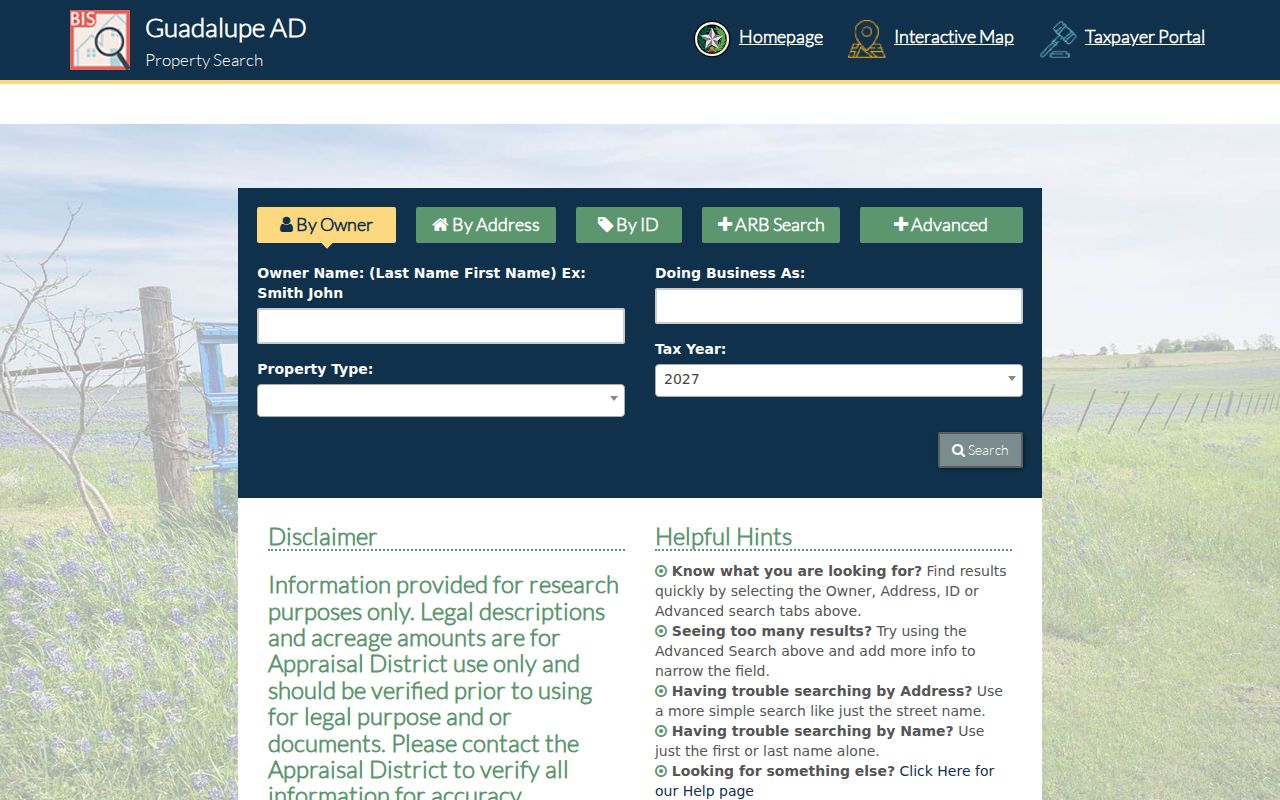
The useful handoff is the property or geographic ID plus the legal description. A parcel card may also show a mailing address, but that is a tax-correspondence field rather than proof of who is living at the Cibolo situs.
- Parcel
- A defined piece of land tracked by the appraisal district.
- Situs address
- The physical location of that parcel.
- Legal description
- The lot, block, subdivision, or survey language that identifies land in recorded documents.
Cibolo Voter Status Checks
Guadalupe County's individual voter tool is a narrow confirmation route. It requires the registered first name, last name, and date of birth in the stated format. The page displays an effective date, so a recent move, registration, or correction may not yet appear. Cibolo voter status is useful only when the precise identifying information is already known.
The county tool is not a by-street resident roll. A formal voter-data request is governed by Texas election rules and includes confidentiality limits. Protected addresses can be withheld, and registration does not establish that every household member lives at a property.
The county voter-status page illustrates the three required fields for a Cibolo registration check.
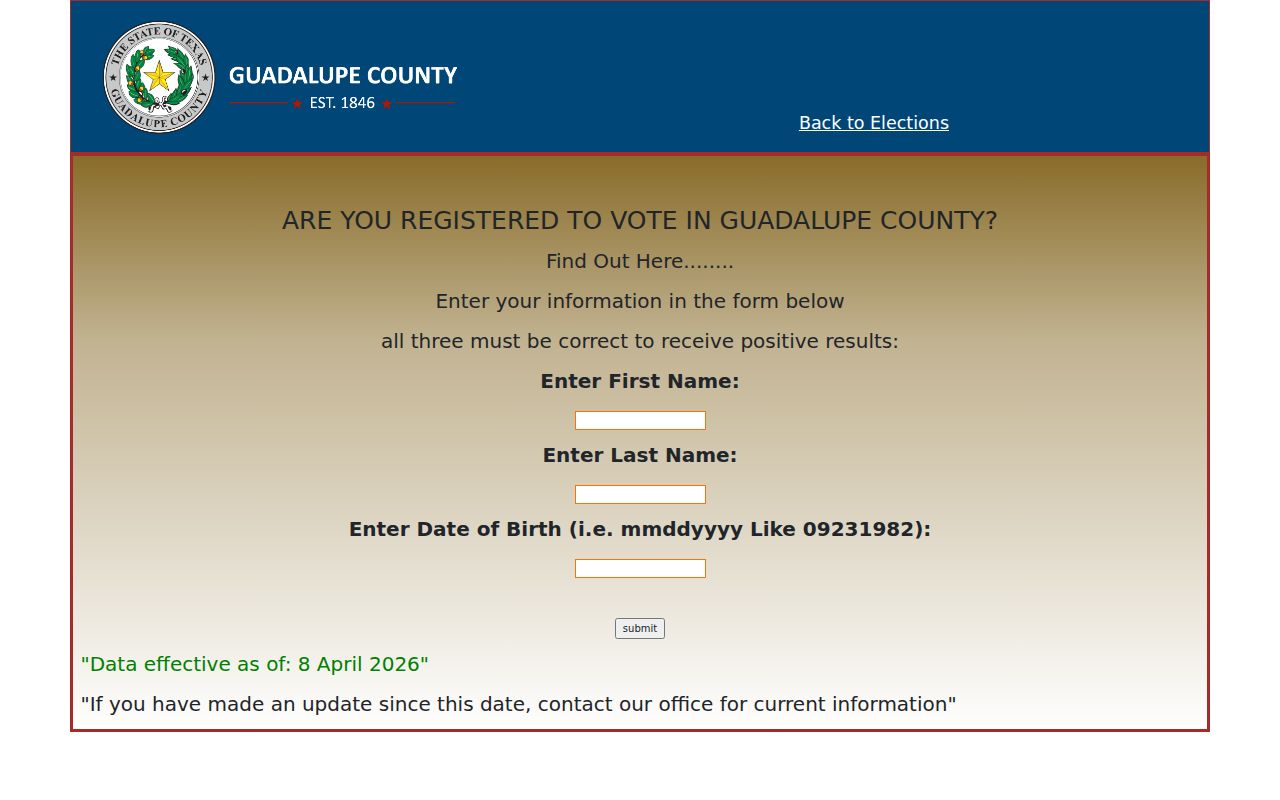
Use a positive result as one dated registration signal, then compare it against independently held property, deed, or historical evidence.
Cibolo Deed Indexes by Era
Recorded land documents create a long Cibolo ownership trail, but the access route changes at 1970. ROAM covers current Guadalupe County records from 1970 forward. The historic QuickLink land-index books cover 1832 through 1970. A searcher following a parcel backward should cross that boundary rather than treating an older owner as a dead end.
Start with the current owner as a grantee, then read the seller, or grantor, in the purchase document. Search that seller as a grantee for the prior transfer. The legal description, instrument number, and book or page keep the chain tied to the same land even when a Cibolo address is formatted differently.
The historic Guadalupe QuickLink index provides the Type, Year, Parties, Last Name, and First Name controls for the older record span.
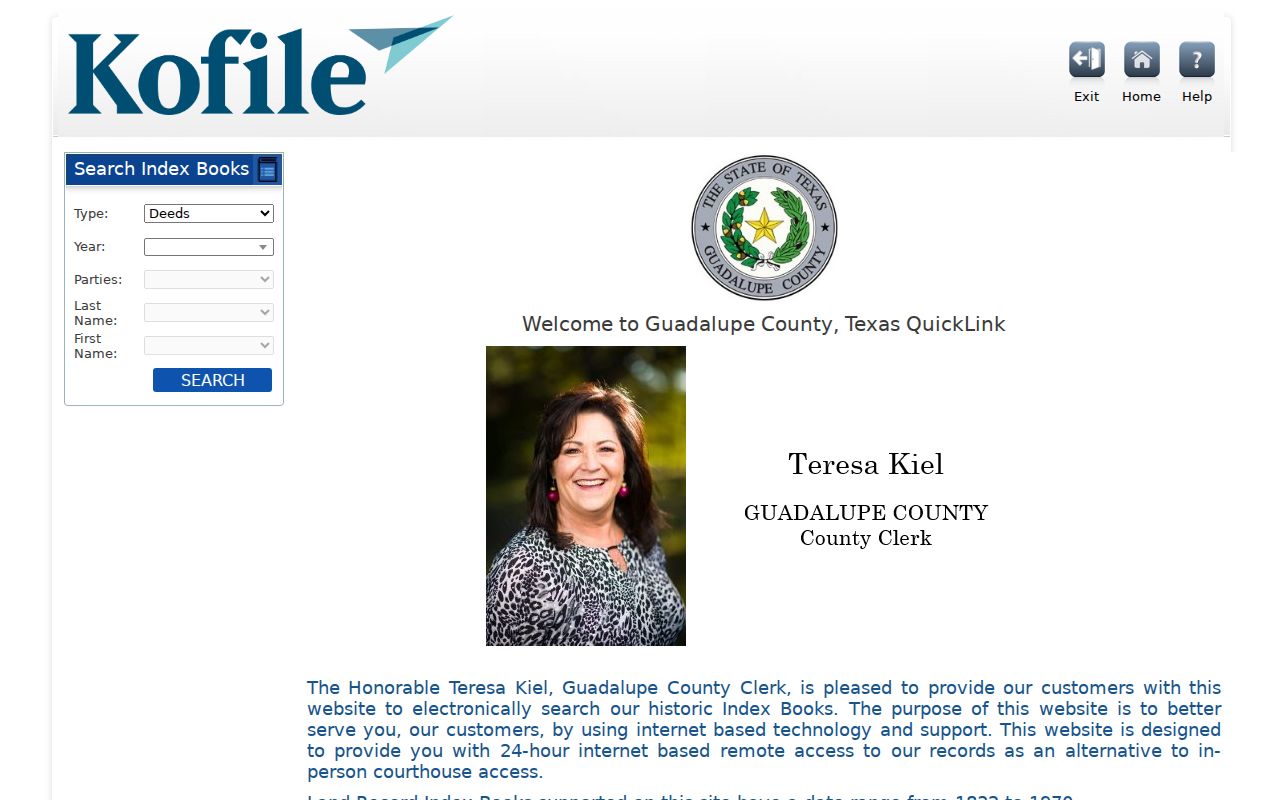
This split record history is especially important for land that predates Cibolo's modern city identity. Earlier material may use a survey, abstract, rural place name, or predecessor-county reference.
Cibolo Court Name Paths
For a Cibolo name question that reaches court records, Guadalupe County's Tyler Public Access route offers Probate and Guardianship, Civil and Family, and Court Calendar areas. Probate and civil-family searches can use Case, Party, Attorney, or Date Filed. A party result should be recorded with its case number, category, filing date, and role before any request is made to a clerk.
County Clerk and District Clerk records supply the counter, copy, certified-copy, and archived-file channels when the web result has no image. Sealed, juvenile, expunged, adoption, and confidential family-law material can be withheld. A docket or calendar entry identifies a court event, not a judgment about a person.
The Guadalupe County public court search is the online starting point for those Cibolo court categories.
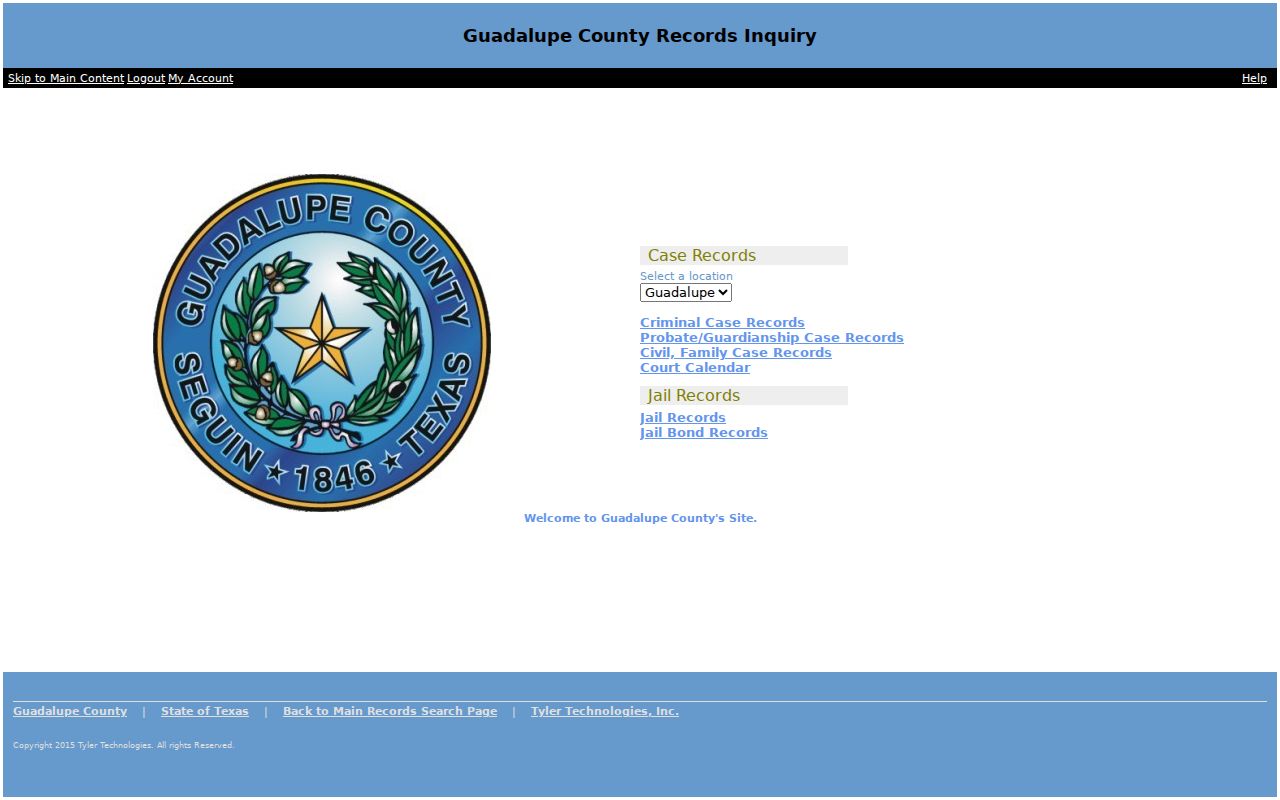
A same-name result needs a second identifier before it is connected to a Cibolo person. Court staff can explain access and copy routes but cannot give legal advice.
Cibolo Municipal Citation Search
Cibolo Municipal Court has a separate public citation portal. Search modes include citation number with date of birth, driver-license number with issuing state and date of birth, vehicle plate with state, first and last name with date of birth, and business name. Sensitive identifying fields should not be repeated in a public search note.
The municipal portal is more limited than a broad resident directory. It does not provide a street-address resident search, and its records should be read through the court clerk when a copy or clarification is needed. A citation account is not proof that the searched person was convicted or still lives in Cibolo.
The Cibolo Municipal Court search shows the separate citation and name-based routes.
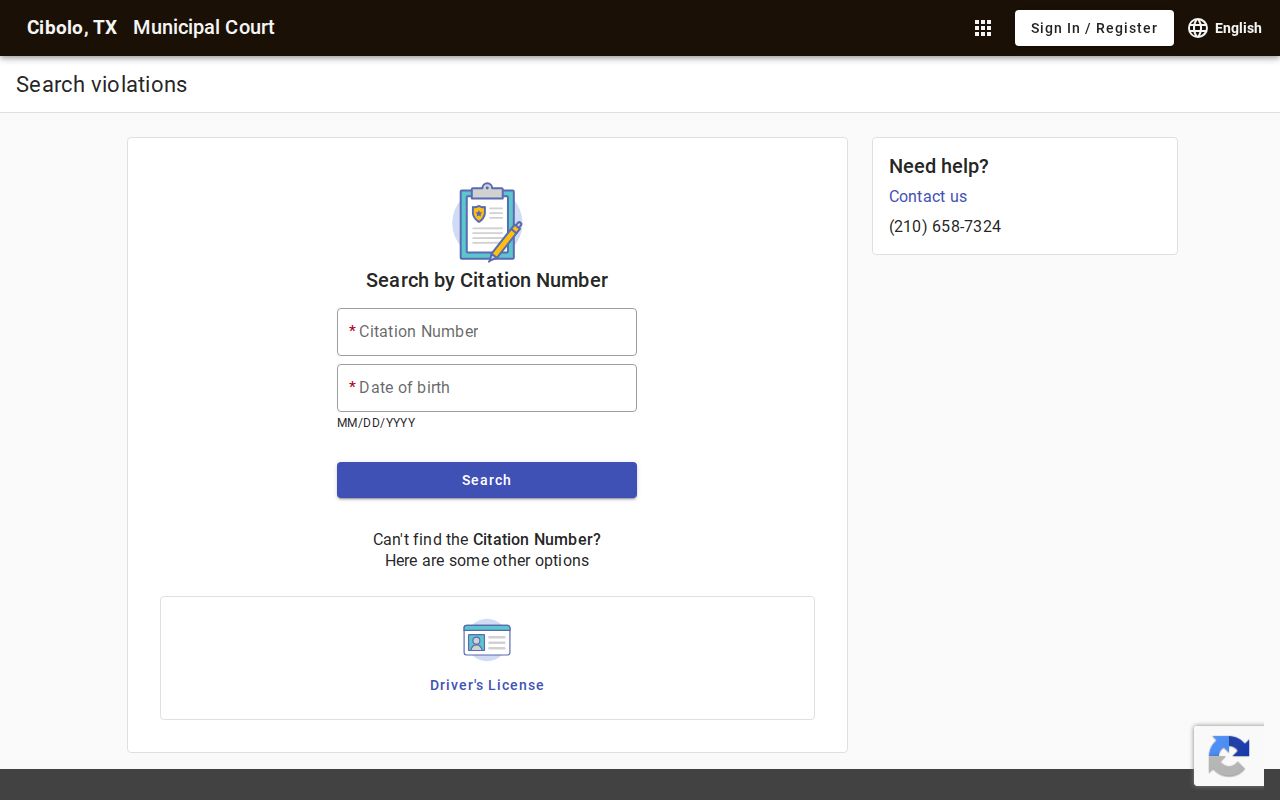
For a named court file, retain the case or citation number and contact the Municipal Court at the clerk level for the permitted record path.
Current Cibolo Resident Directories
Current Cibolo resident records are separated by what they actually document. The appraisal roll is an ownership source. Recorded documents show parties to land and financing instruments. Voter status is a limited registration confirmation. Permits and court systems are event-based sources, not lists of everyone at an address.
| Record source | Cibolo connection | Custodian | Access boundary |
|---|---|---|---|
| Appraisal parcel | Titled owner, situs, legal description | Guadalupe Appraisal District | Free search, not occupancy proof |
| Official records | Deed, plat, lien, assumed-name parties | Guadalupe County Clerk | Index access; image options vary |
| Voter status | Registered voter match and polling route | Guadalupe Elections | Exact name and date of birth required |
| Permit record | Addressed project and inspection trail | City of Cibolo | Some materials need account or request |
A current owner trail is covered in more depth on the Cibolo street directory. A single-person question needs the narrower confirmation approach on the resident lookup page.
Cibolo Vital Record Boundaries
Vital records can confirm a family event, but they are not a casual resident-search layer. Texas Government Code Section 552.115 makes birth records public after 75 years and death records public after 25 years, with a one-year rule for an unidentified decedent. Current certified copies remain restricted to qualified people and authorized channels.
For a Guadalupe event, the County Clerk Vital Records Division and Texas DSHS offer different routes and fee schedules. Marriage or divorce verification through DSHS is not the same product as an underlying marriage license or divorce decree. The decree stays with the court clerk in the filing county.
Use the Texas DSHS Vital Statistics route for statewide forms and verification procedures, or the Guadalupe County Clerk for its local copy route.
Cibolo Public Information Requests
When an index does not show an existing administrative record, Texas Public Information Act requests go to the department that created or holds it. Guadalupe County asks for a written request for an identifiable existing record, not a new database or legal research. Include a person, address, date range, record type, and preferred electronic delivery where that is useful.
Texas Government Code Chapter 552 says information should be released promptly; a body expecting more than ten business days generally must give notice of when it will be available. A request for a court file goes through the court clerk instead of using the administrative-request route to overcome sealing or confidentiality.
The Guadalupe County PIA page identifies the county request path and departmental routing.
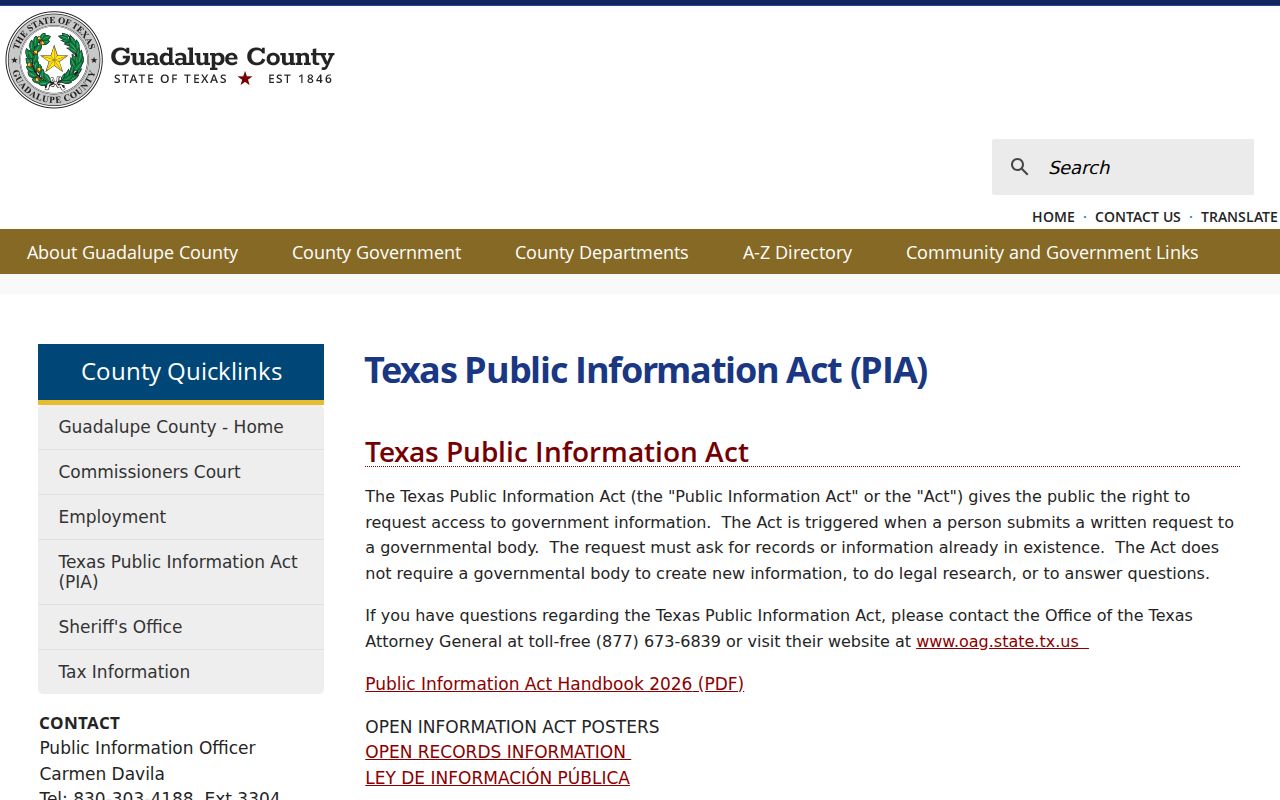
The practical fallback is specific: ask the City for a Cibolo city record, the Appraisal District for parcel material, Elections for registration material, or the appropriate clerk for a court or official-record copy.
Cibolo's 2026 Property Roll
Guadalupe Appraisal District reported that nearly 115,000 appraisal notices were mailed for 2026. That scale helps explain why an appraisal lookup should preserve both the tax year and the search date. The record is refreshed for tax administration and may show ownership, location, and exemption information, but it is not a census of everyone living in Cibolo.
Seasonal changes also matter. A transfer, correction, or exemption update can move through a process after a reader first checks the parcel. Compare the appraisal record with the recorded deed and return to the custodian if an important field appears inconsistent.
Note: The 2026 notice count describes the countywide appraisal system, not a count of Cibolo households or residents.
Cibolo Business Record Checks
A local business connection should be verified through the record that created it. SOSDirect can show entity filing information, while Guadalupe County official records can include assumed-name filings. A professional board can confirm a license status. None of those records should be treated as proof of a person's home address.
The state business search charges a statutory search fee and separates images or copies from a basic result. Record the entity name, file number, status, and search date. For a Cibolo permit or project, the applicant may be a contractor or agent rather than the parcel owner.
The Texas SOSDirect business-search page is the official statewide entity route.
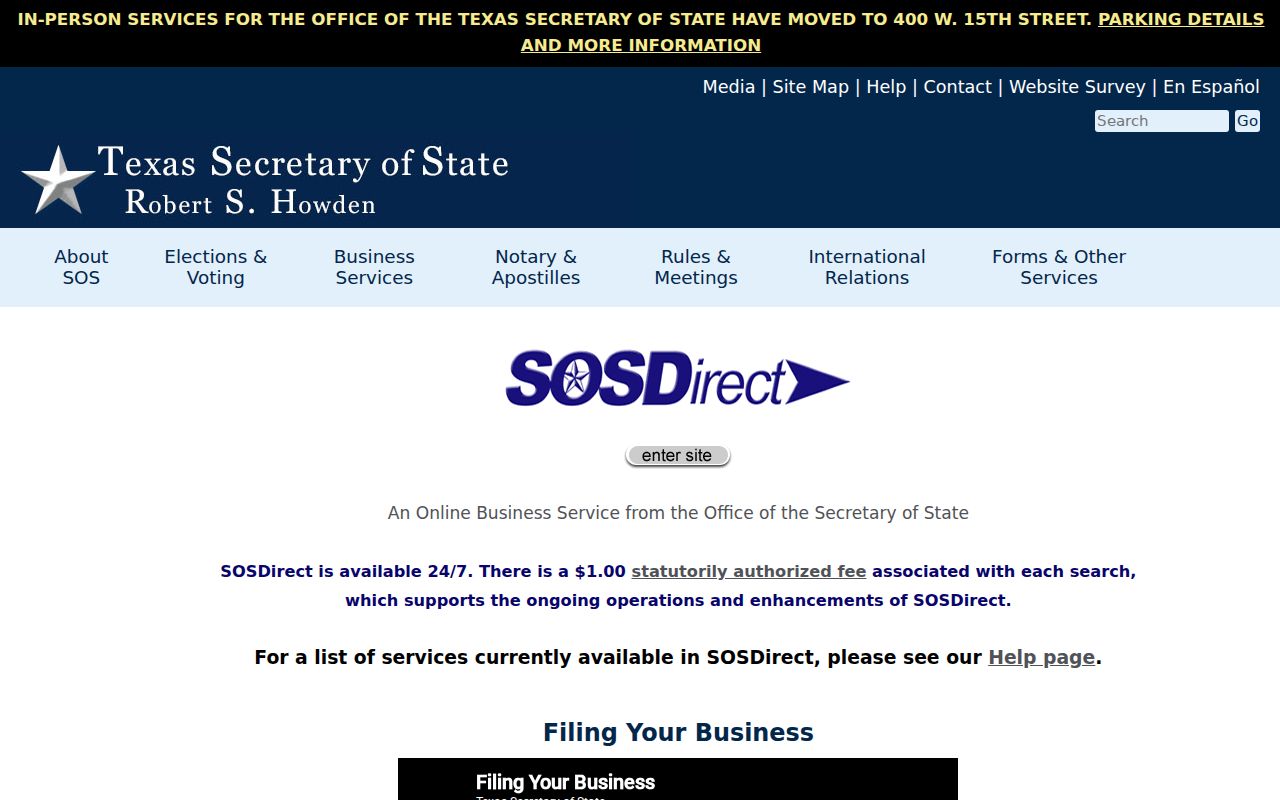
Pair an entity finding with a Guadalupe assumed-name filing, permit, or recorded document only when the dates and identities line up.
Historical Cibolo Directory Trails
Cibolo has no verified standalone city-directory run in the inspected official catalogs. The useful regional leads are Seguin directories from 1976 and 1978 in the San Antonio Genealogical and Historical Society catalog, plus Seguin 1982 and 1985 holdings at the Texas State Library and Archives Commission. Earlier Cibolo households can also be filed under Schertz, Seguin, rural Guadalupe County, or a postal-city label.
Seguin Public Library's Local History Room adds Gazette microfilm from the late 1890s, census reels, Sanborn maps, yearbooks, and a genealogy computer. The full collection and entry-reading approach belongs on the Cibolo city directory page. A directory supplies a dated lead, then a deed, tax roll, obituary, or probate file can confirm the connection.
Note: A regional directory is a publication snapshot, not conclusive proof that a household occupied a Cibolo address on every day of that year.
Cibolo Privacy and Search Limits
Some information that looks useful in a resident search is intentionally closed. Driver-license and motor-vehicle personal information is protected. Utility customers are not a public household directory. Election confidentiality rules protect certain addresses, and the Texas Address Confidentiality Program gives qualifying participants a substitute address route. Appraisal and recorded-document systems also carry redactions or suppression rules.
Commercial people-finder categories may mix old public filings with brokered data and can merge people with the same name. Official Cibolo and Guadalupe sources are better for checking what one record actually says, while still requiring careful comparison and lawful use. Stop when a record is protected, and direct correction requests to the office that created the record.