
Cibolo Neighbors Block Record Sources
Block research is strongest when it separates land information from people information. The Guadalupe appraisal map identifies boundaries and links to parcel cards. The appraisal roll identifies a current titled owner, tax mailing address, legal description, and exemptions that may be incomplete online. Recorded plats and declarations define lots and subdivisions. Community pages can identify events or a manager, while election records have their own confidentiality rules. None of those sources should be combined into a public roster of a block.
| Source | What It Shows About a Block | Access |
|---|---|---|
| Guadalupe appraisal map | Parcel boundaries, nearby lots, map themes, and map-to-property links | Free map; some property types may not be mapped |
| Guadalupe Appraisal District | Owner, situs, mailing address, legal description, values, and exemptions | Free online; owner is not occupant proof |
| County Clerk records | Plats, declarations, amendments, and subdivision instruments | Index and clerk routes; image access can vary |
| Elections Office | Custodian route for voter data governed by Texas law | Individual lookup is not an address browse |
| Community association pages | Public events, management contact, and governing documents | Community-level information, not member rosters |
The parcel card is an ownership record, not a census of a home. A different tax mailing address is a contact clue, not proof that anyone occupies the parcel. The same caution applies to a community announcement or a historical newspaper item tied to an address.
Cibolo Neighbors Through Adjacent Parcels
The immediate-block method begins with one verified parcel. Search the address in the appraisal system, retain its Property ID, situs, and legal description, then open the associated map. The map's text search accepts a name, business, or all or part of a street address. Once the map is close enough to display boundaries, select the polygon for the known parcel and click the surrounding polygons one at a time. The aerial layer can help distinguish a corner lot or a rear lot, but it does not identify occupants.
- Locate the known Cibolo address in the appraisal search and record the Property ID, subdivision, lot or block, and situs.
- Open the map, zoom until property boundaries are visible, and select the parcel that matches the legal description.
- Click each immediately adjoining or opposite parcel, recording its Property ID, street name, legal description, and displayed owner separately.
- Compare the situs and mailing address, owner name, legal description, value, and HS indicator on each parcel card. HS is a tax-treatment signal, not conclusive proof of current occupancy.
- Use a recorded plat or declaration to test the subdivision boundary. If the goal expands to a whole road, use the street-focused workflow instead.
For a named street rather than a short block radius, the Cibolo street directory follows the broader address-and-record chain.
Cibolo Neighbors Map Boundaries and Gaps
The appraisal map includes Property Boundaries and Themes, with text search, radius, neighborhood, subdivision, measurement, print, and map-analysis controls. A neighborhood or subdivision analysis can frame a sensible local area, but it is not a list of people. The published map interface limits results to 1,000 rows. It also warns that personal property, mineral property, and some mobile-home property may not be mapped, while an unmapped real-property parcel may simply await mapping.
When a parcel card does not appear, first check the map scale and those coverage limits. Do not infer that an empty area has no owner, no resident, or no record. County GIS supplies a separate mapping and addressing contact route through the Road and Bridge/Development Center. The legal description is often more durable than a postal label because Cibolo includes subdivision lots, older rural tracts, and nearby postal-city variation.
Note: A matching lot and block within a subdivision is stronger parcel evidence than a shared postal-city label.
Cibolo Neighbors in a Growing Parcel Map
Cibolo's current parcel tools are especially useful because the city has grown quickly. Census QuickFacts reports 15,349 residents in 2010, 32,276 in the 2020 Census, and a July 1, 2025 estimate of 39,019. Newer subdivisions can have a detailed parcel and GIS trail without an older city-directory entry. The reverse can happen for older Guadalupe County families, who may surface in newspapers, tax rolls, cemetery records, or regional directories without a modern Cibolo street address.
Subdivision terminology is a practical bridge. Cibolo public records include names such as Cibolo Valley Ranch, Four Leaf Park, George Schlather, and Northside-Cibolo alongside abstract and survey descriptions. Save that language when comparing a map, parcel card, plat, or deed. It reduces the risk of treating two similar street labels as the same block.
Note: A newer Cibolo parcel can have rich map data even when no older directory line exists for that address.
Cibolo Neighbors Association Records
Two local community sites offer a clear example of what association material can and cannot show. Grace Valley and Foxbrook publish public community-level information. Their pages are useful for identifying a management contact, notices, or governing documents. Community websites do not publish member rosters. A login or resident account is not permission to compile names, and neither page should be treated as a directory of people on a block.
Grace Valley Community Association
Grace Valley's public page lists community news, events, an office contact, and CCMC management for the Cibolo community.
It does not provide a public resident list.
Foxbrook Residential Community
Foxbrook's community portal lists governing documents, Goodwin & Company management, and resident login or registration.
Its public materials do not publish a member roster.
Grace Valley's public community page is the source represented below.
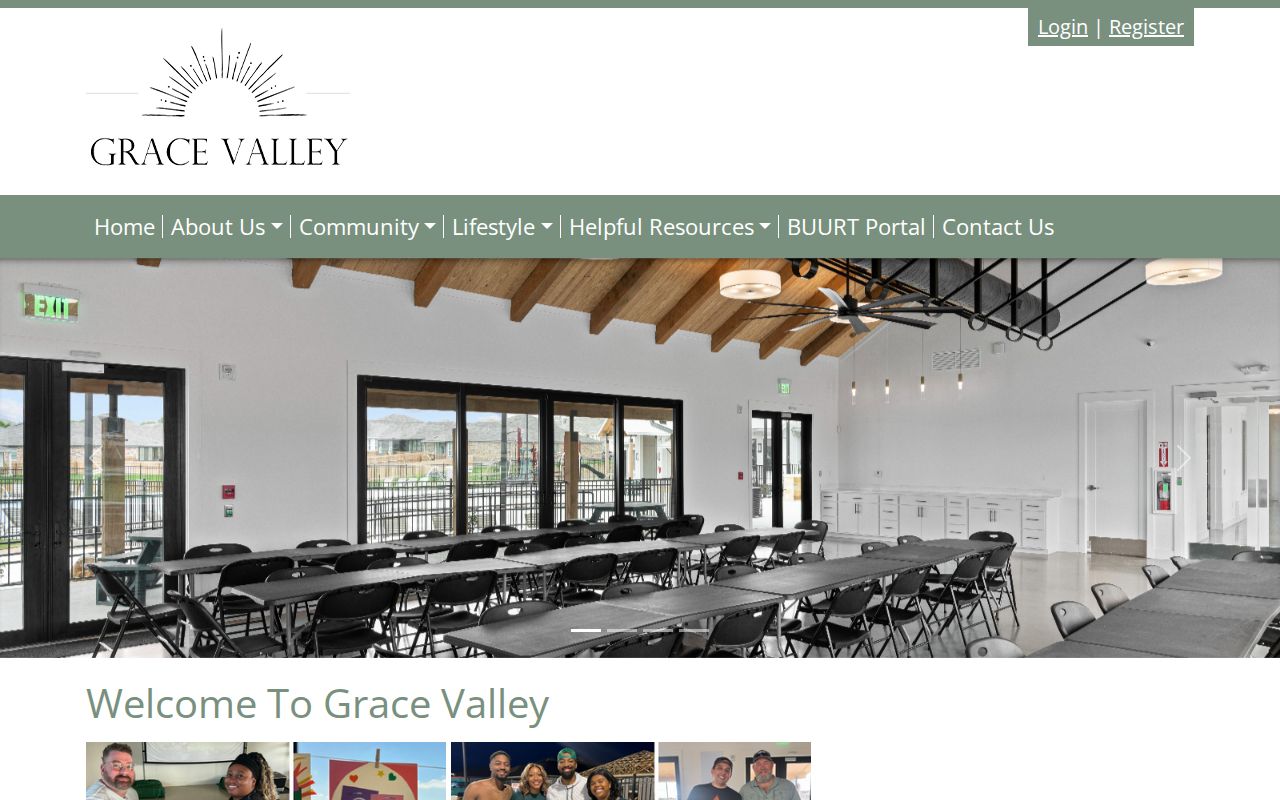
The page supplies community information and a management route, rather than household names.
Foxbrook's public portal shows the document and account structure for that Cibolo community.
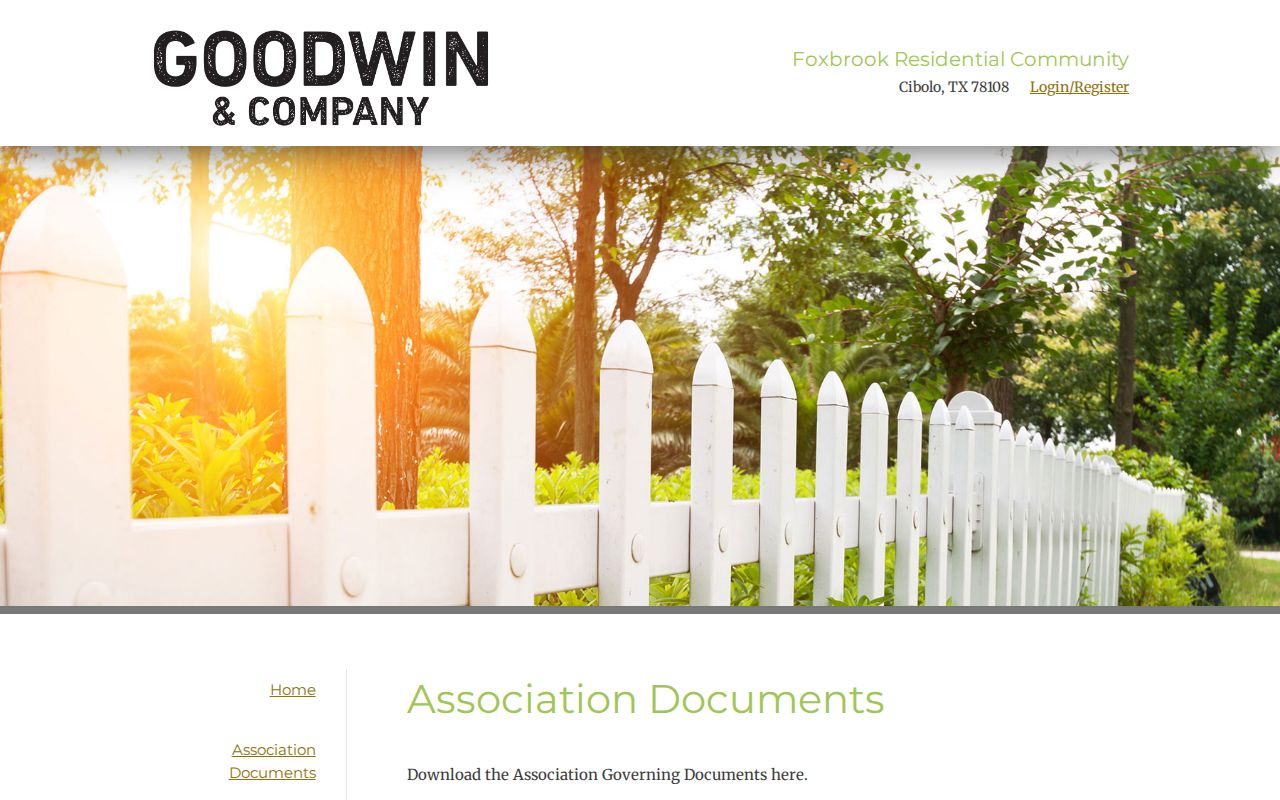
Recorded declarations, management certificates, and amendments in the County Clerk index remain the stronger route for association boundaries and instruments.
Cibolo Neighbors Voter File Route
The Guadalupe County individual voter lookup is a three-field status check. It requires first name, last name, and date of birth, so it cannot sweep every house on a street or block. A formal Texas voter-registration public-information request is the only address-oriented route identified in the research. The request includes an affidavit, delivery options, scope, record type, and intended lawful use. It is not an invitation to turn registration data into a neighborhood directory.
Even a lawful address-oriented extract can show a registered voter rather than every person at an address. It can be affected by registration timing, list maintenance, confidentiality redactions, and a move that has not yet been reflected in the displayed snapshot. Texas Election Code Section 18.009 also prohibits using voter-list information to advertise or promote commercial products or services. Keep protected records protected and retain the request's lawful-use certification.
Guadalupe County Elections is the local registrar and voter-record contact.
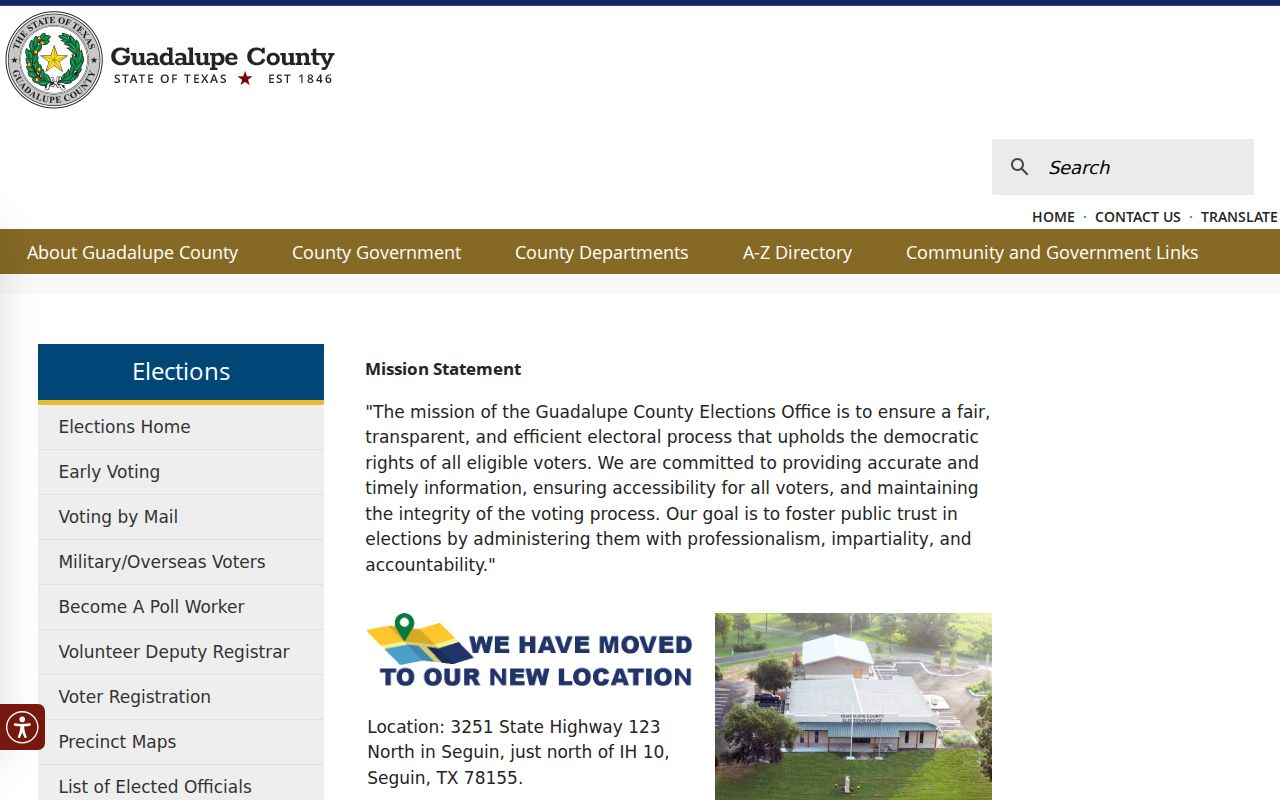
The county office is the correct place for registration, records, and current election guidance, not a block-by-block online search.
Cibolo Neighbors Official and Commercial Sources
Official records and commercial neighbor-profile categories do different things. The official source normally identifies its custodian, field limits, update setting, and request path. A commercial category may combine public filings, marketing data, and brokered identifiers, which can be stale or merge people with similar names. Neither one converts a parcel owner into proof of occupancy, but the official route gives a researcher a way to check the original record and ask the custodian about an error.
| Official record route | Commercial neighbor-profile category |
|---|---|
| Shows a defined parcel, instrument, voter request, or association document with a named custodian | May combine records from different dates and sources |
| Allows field-by-field limits and correction questions through the originating office | Can blend similar names or retain information after a source changes |
| Still has confidentiality rules and does not establish household membership | Should not be treated as verified identity, occupancy, or a complete block list |
Texas privacy rights can apply to covered data businesses, but they do not erase a retained county deed, appraisal card, court docket, or election record. A correction to an official source belongs with the office that created the record.
Note: Compare a Cibolo block finding against its source record before treating it as an identity or occupancy fact.
Cibolo Neighbors Past Block Clues
A block has a time layer as well as a parcel layer. Seguin Public Library's Local History Room holds Guadalupe County newspapers, Sanborn maps, census microfilm, yearbooks, and genealogy resources. Its Gazette microfilm begins in the late 1890s, while NewsBank access starts in 2005. That split matters when a deed or plat suggests an older household but a modern map provides no history.
Use an old newspaper item, directory, or obituary as a dated clue. Then test it with a legal description, deed, probate record, tax roll, or historic map. The Schertz-Cibolo Cemetery can support deceased-family research, but it is not evidence of a current Cibolo connection. Keep search terms flexible: Cibolo, Schertz, Seguin, Marion, Santa Clara, Guadalupe County, a subdivision name, and the exact street suffix can point to different systems.
Cibolo Neighbor Lookup Request Limits
When a map, plat, or association record is missing online, ask the office that holds the existing record. Guadalupe County's Texas Public Information Act route directs a requester to the department that created or maintains the material. Describe a specific plat, declaration, map layer, date range, address, or instrument number. The law is for existing records, not a request that an office create a new neighbor list or carry out research on a person's behalf.
The County Clerk is the natural route for recorded declarations and plats. County GIS can address mapping or addressing questions. The Elections Office handles voter records and the statutory request process. City agendas, library events, church announcements, and nonprofit filings can provide public community context, but no authoritative citywide association directory or block-watch roster was located. That absence is a limit, not a reason to substitute speculation.
Guadalupe County's public-information request page provides departmental routing for existing records.
Cibolo Neighbor Lookup Privacy Limits
Protected address information is not a data gap to work around. Texas's Address Confidentiality Program can give qualifying safety participants a substitute address. Election Code Section 13.004 restricts identifying voter information and protected residence addresses; protected entries can display asterisks instead of the address, and program participants may not appear in ordinary voter registration records. Driver-license, motor-vehicle, utility, and delivery records are not public sources for building a household list.
Owner status, a mailing address, a homestead indicator, or a community document may suggest a question worth confirming, but none proves who lives in a structure. Stop when a result is protected, incomplete, or inconsistent. Preserve the record reference and ask the custodian about a correction or lawful access path rather than trying to infer the missing detail.
Texas voter address confidentiality guidance describes the protected-address rules and application route.
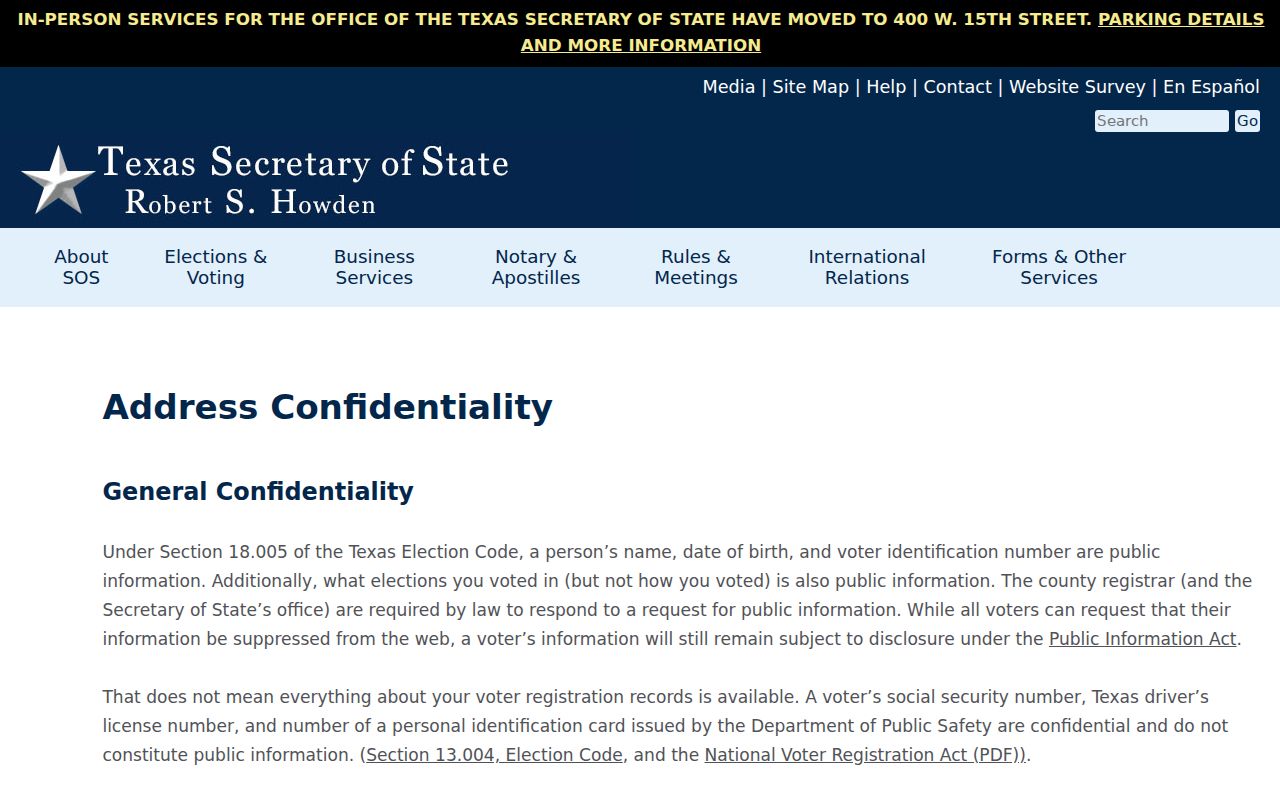
Address suppression protects people who qualify for it, and it should be respected as a safety measure rather than treated as a missing lead.
Lawful use. Use Cibolo neighbor records for personal, lawful curiosity and never to watch, stalk, harass, intimidate, or harm another person.