
Cibolo Previous Residents by Era
The backward trail for a Cibolo address changes with the era. Start with the current parcel owner and legal description, then choose the record system that covers the needed period. Recorded deeds identify transfers, while directories and census sources add household context. Tax rolls, maps, permits, newspapers, and probate can bridge gaps, but each has a limited purpose. The table makes the Cibolo previous residents search an era-by-era task instead of a broad name hunt.
| Source | Years it covers | Where held | What it can add |
|---|---|---|---|
| County Clerk ROAM | 1970-present | Guadalupe County Clerk / ROAM | Indexed conveyances, liens, plats, and the current owner-to-seller chain |
| Historic QuickLink index | 1832-1970 | Guadalupe County Clerk linked Kofile index | Older grantor, grantee, year, and document-type leads |
| TSLAC Guadalupe deed and tax records | Deeds 1846-1902; tax rolls 1846-1910 | TSLAC microfilm and related FamilySearch access | Early deeds, direct and reverse index reels, land, and tax context |
| Regional directories and census | Seguin leads: 1976, 1978, 1982, 1985; census 1940 and 1950 public | Library, SAGHS, TSLAC, and census databases | Dated name, address, phone, and household context |
| Cibolo permits and local newspapers | Portal starting year not stated; newspaper microfilm late 1890s-current | MGO and Seguin Public Library | Project dates, inspections, notices, obituaries, and address-change context |
For a recent transfer, begin with ROAM. At the 1970 boundary, shift to QuickLink. If the parcel reaches the early county period, consult the TSLAC route and ask the County Clerk or library staff which underlying book, reel, or microfilm source fits the document reference.
Cibolo Previous Residents in ROAM
ROAM is the current official-records index for Guadalupe County and lists records from 1970 forward. Its public search is free at the unofficial level. The index can support a house-history sequence when the researcher has the current owner, a likely transfer period, or the legal description. Its subscription information distinguishes the index from document-image access, and the official tier includes phonetic name searching and document chaining. Those features can help with a surname variant, but they do not replace reading the recorded document and its parcel description.
The Guadalupe County ROAM access information shows the available current-record coverage and image-access routes.
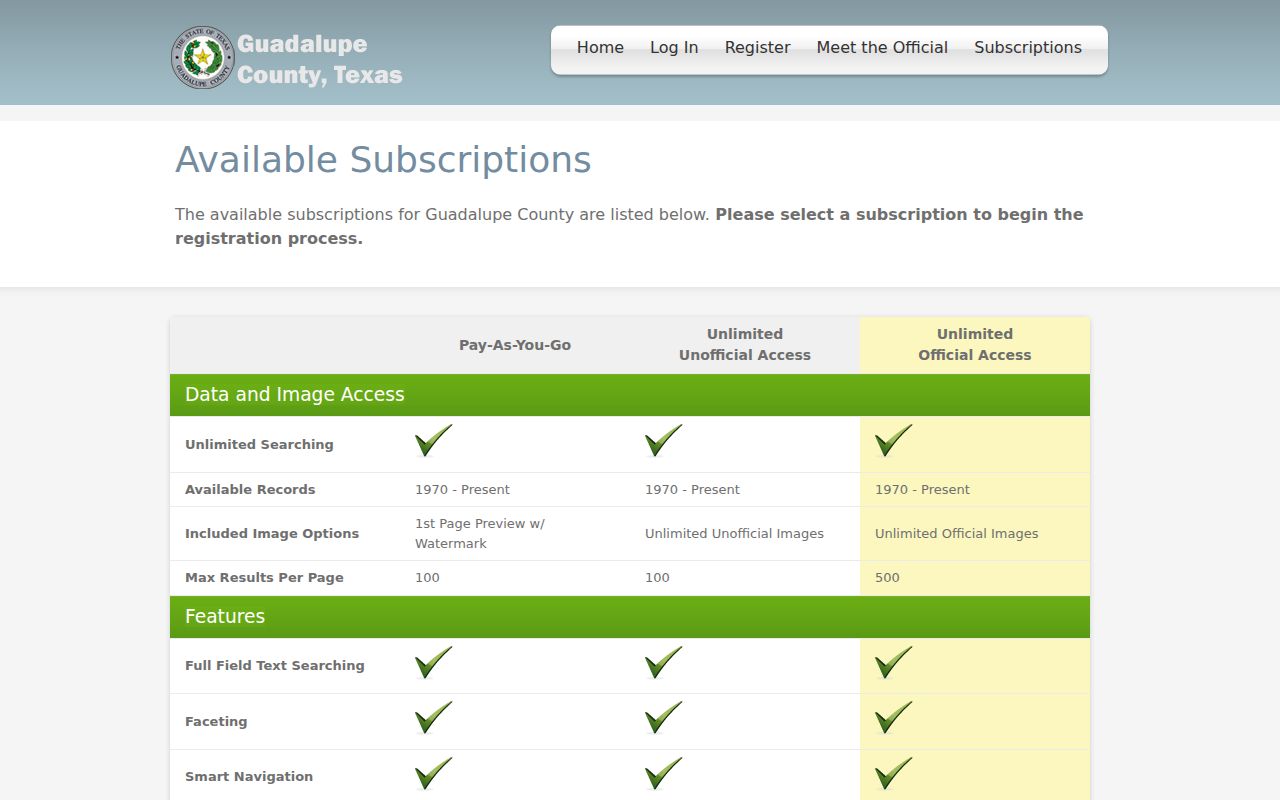
The screenshot is a reminder to retain the index citation as well as any image obtained later. A first-page preview may be watermarked, and the Clerk advises that the online database is not the complete or unaltered official repository.
Cibolo Previous Residents Deed Chain
A chain of title begins with land evidence, not an assumed occupant name. Pull the current Guadalupe AD parcel card and record the owner, Property ID, Geographic ID, situs address, and legal description. In ROAM, search the current owner as a grantee near the likely purchase period. The seller named in that conveyance becomes the next person to search as a grantee. Repeat the sequence, keeping the document number, book or page, subdivision, lot and block, or abstract and survey at every turn.
- Find the current parcel in Guadalupe AD and copy its legal description along with the address and parcel identifiers.
- Search the current owner as grantee in ROAM and read the purchase deed’s seller, recording reference, and land description.
- Search that seller as grantee to locate the seller’s earlier acquisition, checking both direct and reverse index paths.
- Repeat the handoff from seller to prior grantee until the chain reaches the 1970 access boundary.
- Continue in QuickLink, then obtain a book, page, image, or microfilm record from the Clerk or archival route when the historic index needs support.
- Grantor / grantee
- The grantor conveys an interest in land. The grantee receives it. In a backward search, the seller named on one deed is often the next earlier grantee to investigate.
- Chain of title
- A documented sequence of transfers for the same parcel, read from one recorded conveyance to an earlier one.
- Legal description
- The land identity, often a subdivision, unit, block, lot, abstract, survey, or acreage description. It survives address formatting changes better than a street label.
- Criss-cross directory
- A directory’s address section, when present, that can associate a street address with a dated listing.
Cibolo Previous Residents Before 1970
The 1970 ROAM and QuickLink boundary is an access split, not a gap in ownership. QuickLink’s Guadalupe land-record index books cover 1832 through 1970. Its historic form uses document type, year, party selection, surname, and optional given-name fields. Search alternate spellings and document types, then use the result to seek the supporting book, page, or image. A Cibolo address may not appear in the older material at all, especially for a rural tract that was described by survey, abstract, or predecessor geography.
The TSLAC Guadalupe County holdings document deed records from 1846 to 1902, deed-of-trust records from 1860 to 1886, tax rolls from 1846 to 1910, and direct and reverse index reels.
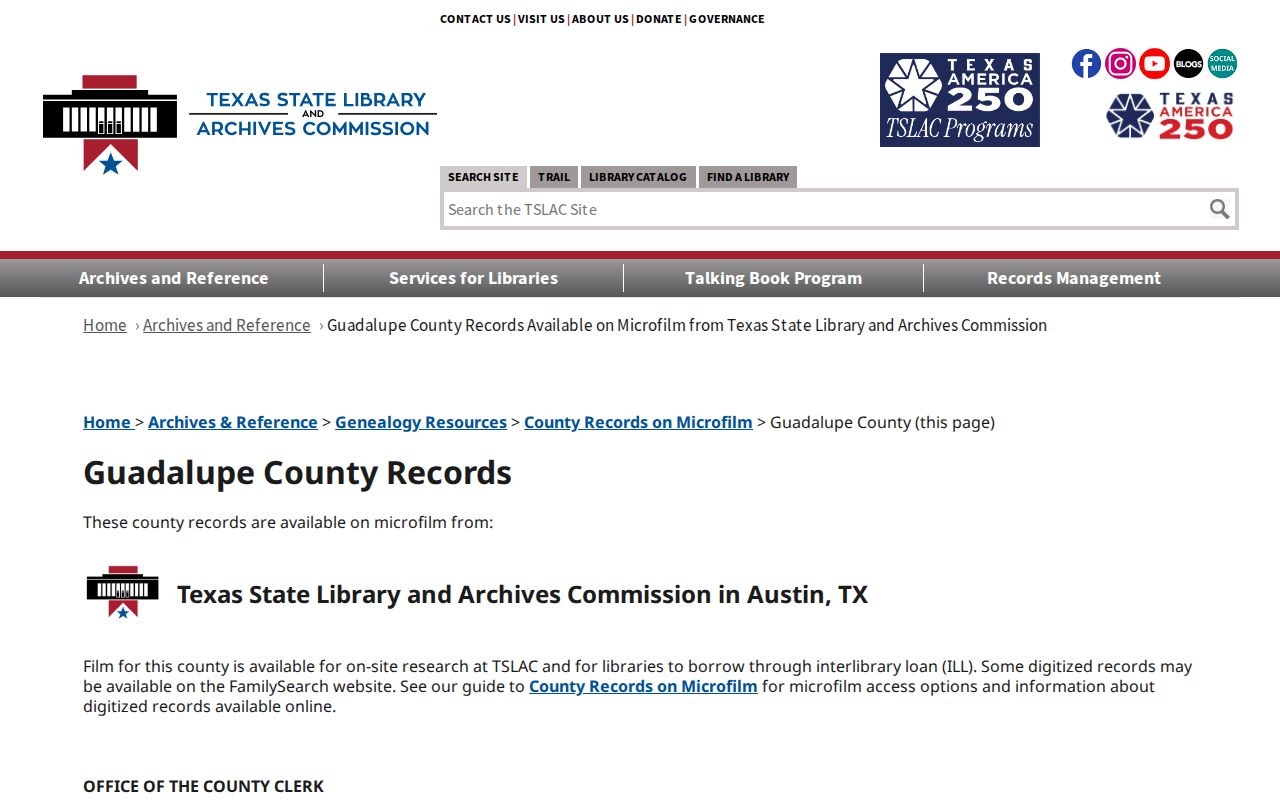
TSLAC and related FamilySearch access are fallback channels when a historic index result needs a record image or when the parcel trail enters the early county period. Digitization is incomplete, so a missing online result should not be treated as proof that no record exists.
Cibolo Addresses Need Land Keys
Street labels can drift while the land identity remains useful. Cibolo records use subdivision, unit, block, and lot descriptions in platted neighborhoods, and abstract or survey acreage for older rural tracts. Cibolo Valley Ranch, Four Leaf Park, George Schlather, and Northside-Cibolo are examples surfaced in city rezoning material. Search both old and current street names in deeds and plats, but carry the lot, block, subdivision, abstract, or survey through the research note.
No official Cibolo renumbering or citywide street-renaming chronology was located. USPS formatting, city limits, and postal labels can change without changing the legal description. Use the assessor’s situs, the GIS or Property ID, and the legal description as the continuity bridge, then ask the City Secretary, County GIS, or library to verify any claimed historical address change.
Cibolo Previous Residents Household Trail
Deeds track legal transfers, not every household. To research who lived here before, pair a dated address source with the nearest available census. Cibolo does not have a verified standalone directory run in the inspected official catalogs, so regional Seguin, Schertz, rural Guadalupe County, and postal-city headings may matter. The Seguin Local History Room has Texas census microfilm and a genealogy computer, while HeritageQuest provides census access. The directory collections are outlined on the Cibolo city directory page.
- Start with a known surname or address in the newest available regional directory and check both the alphabetic and street sections when present.
- Save spelling, initials, spouse, address, street suffix, and any other printed identifier before moving back a volume.
- Compare the date with the public 1940 or 1950 census, using the address as an era clue rather than assuming annual occupancy.
- Work through the available regional years and confirm a household claim with a deed, probate item, obituary, appraisal history, or permit record.
A directory is a publication-date snapshot. It may include a name, address, telephone, spouse, and other volume-specific markings, but its own front matter must supply the abbreviation key. The inspected sources did not surface an accessible local sample entry or a verified Cibolo volume key.
Cibolo Previous Residents Property Dates
Sanborn maps, permits, and plans can date the building side of an address story. Seguin Public Library lists Sanborn Fire Insurance Maps, but no complete Cibolo sheet-year table was verified. A map can help identify a building footprint, street label, land use, or block context. It does not establish ownership. Pair it with the parcel legal description and a deed, then use a directory only as a dated household clue.
Cibolo MGO permits can be searched by address, name, or permit number and may show a project’s type, status, issue date, inspection, plan document, or review letter when public. An applicant may be a contractor or agent, so the permit should date work without being recast as a resident record. Where documents are absent online, request existing address-keyed files under the Texas Public Information Act.
Cibolo Previous Residents Final Records
Obituaries and probate often supply the closing context for a past household, but they should be handled as dated historical evidence. Seguin Gazette-Enterprise microfilm runs from the late 1890s, while the library’s NewsBank route begins in 2005. That leaves microfilm as the older newspaper path. Probate can identify a decedent, executor, heirs, and property, subject to sealed-file restrictions. A later deed may connect an estate event to a transfer, but an obituary address should never be treated as a current address.
The Texas Historical Commission’s Schertz-Cibolo Cemetery record is another historical endpoint source.
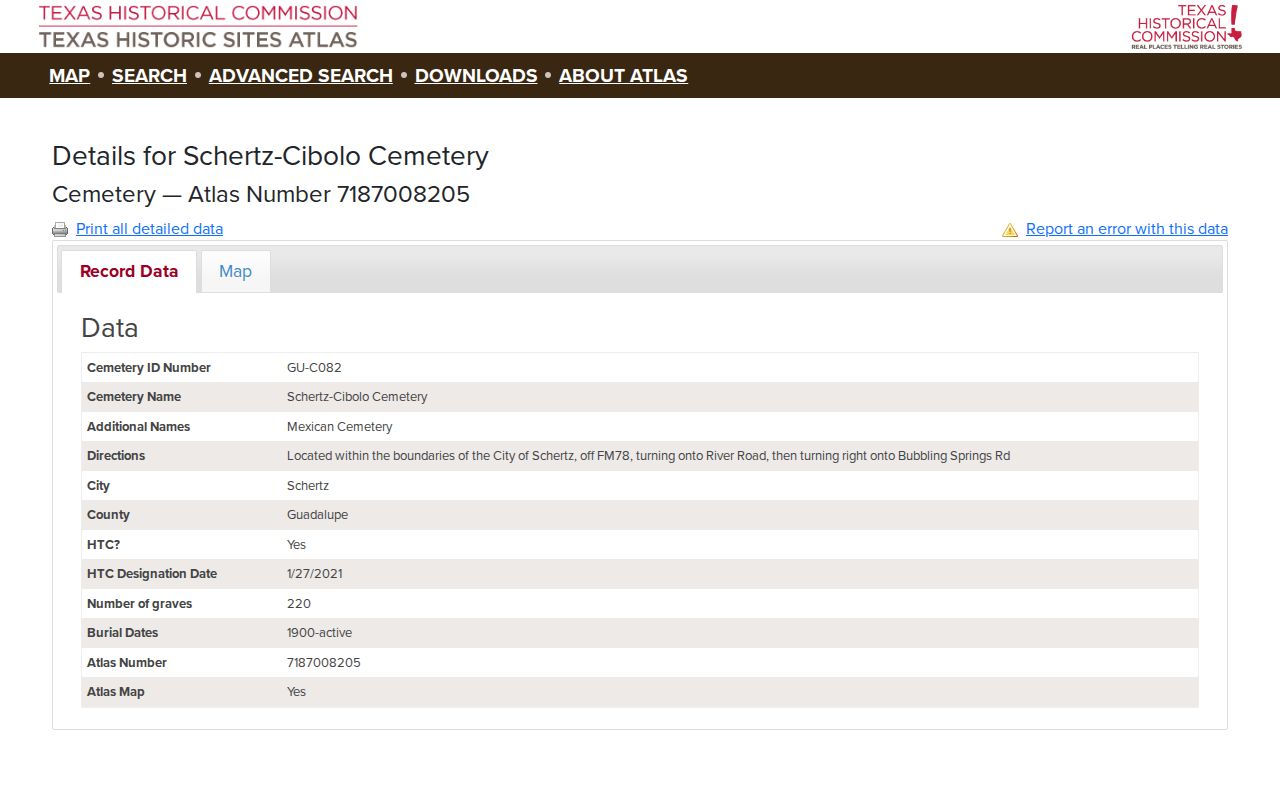
The cemetery record identifies a documented historical collection, not a current residence source. Its 1900-active range and listed graves can guide a newspaper, probate, or family-history search when the address trail has reached a deceased person.
Cibolo Previous Residents Clerk Fallback
When an index ends or an image is unavailable, the Guadalupe County Clerk remains the records custodian. The Official Records Division records deeds, mortgages, liens, plats, foreclosures, and related instruments. Written public-information requests for existing county records can be sent to 211 W. Court Street, Seguin, or ccrecords@guadalupetx.gov. The Clerk does not conduct title searches, determine ownership, or offer legal advice, so the fallback is a document-access route rather than a conclusion about title.
The Guadalupe County Clerk provides the official records, probate, and historical-copy contact route.
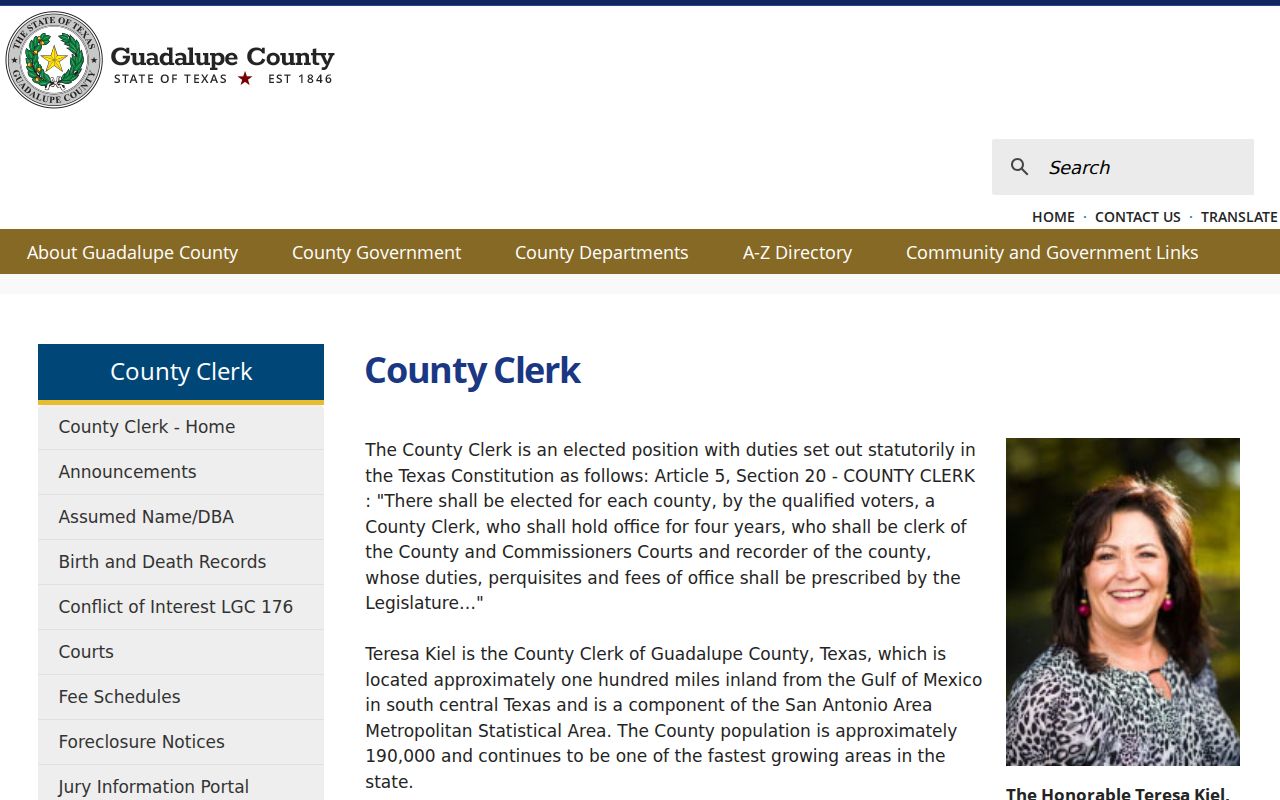
The counter and written-request route matter most when QuickLink supplies only a party or year lead, when TSLAC points to microfilm, or when a document needs an official copy rather than a search result.
Cibolo Previous Residents Use Lawfully
House history, family history, heir research, and personal curiosity are appropriate reasons to assemble a dated Cibolo address timeline. Keep sensitive details to what is necessary for the research question. Protected voter records, redacted instruments, sealed probate material, and nonpublic utility information are not gaps to work around. They are limits to respect.
Lawful use. Research previous residents for personal historical or family purposes, and verify records with the custodian. Do not use a past address trail to stalk, harass, or track a living person.
Several local limits remain documented research gaps: no verified standalone Cibolo directory run, no official citywide address-change chronology, no complete local Sanborn inventory, and no confirmed courthouse-loss or imaging-cutover history. Preserve those gaps in the timeline and seek confirmation from the Clerk, City Secretary, County GIS, TSLAC, or library rather than filling them with assumptions.